
You plan a trip to southern Italy and want clear, practical guidance. Puglia sits on the heel of the country, with the Adriatic Sea on one side and the Ionian Sea on the other, offering historic towns, long coastlines, and a slower pace of life without heavy crowds. This Puglia travel guide shows you where the region is, when to go, how to get there, and what to see so you can plan a smooth trip, from walking old town centers to swimming at quiet beaches and choosing where to stay.
You travel here for calm days, good food, and authentic places. Puglia rewards slow plans, short drives, and time by the sea, and this guide helps you make smart choices while avoiding common travel mistakes.
Key Takeaways
- Learn where Puglia is and how to plan the best time and route.
- Discover top places, coastlines, and local culture worth your time.
- Get clear tips on transport, stays, and easy itineraries.
Where Is Puglia?
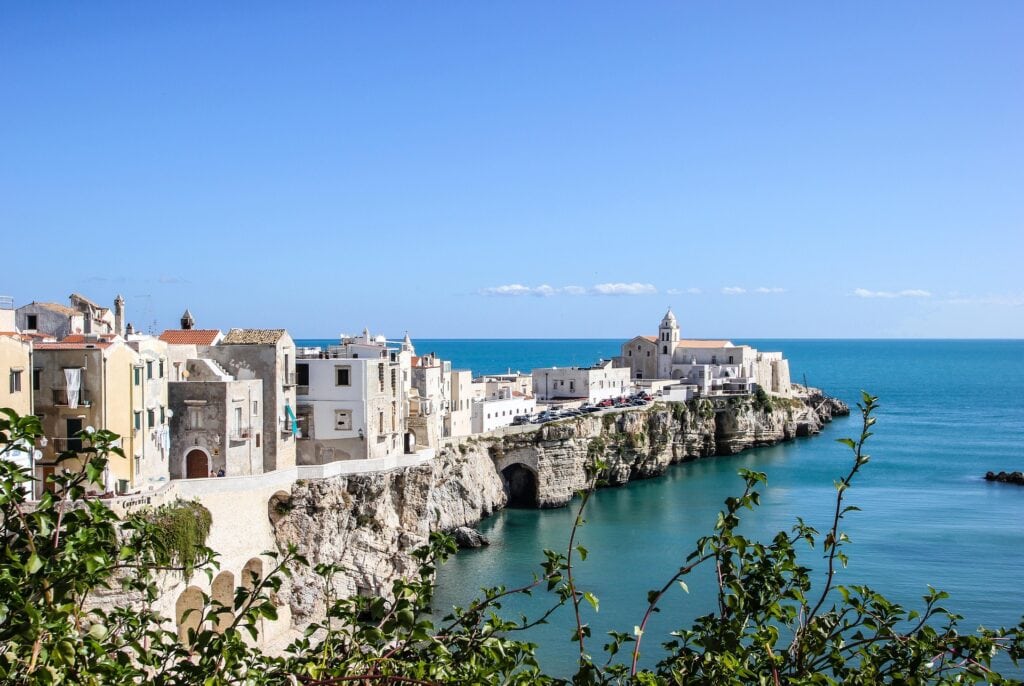
You find Puglia in southern Italy, along the edge of the Italian peninsula. The region forms the “heel” of Italy’s boot and stretches between two seas. Many guides also call it Apulia, its English name.
Puglia Italy sits between the Adriatic Sea on the east and the Ionian Sea on the south. This long coastline explains why Puglia Italy beaches play a big role in travel plans. You can move from rocky cliffs to sandy shores within short drives.
The region borders Molise to the north and Campania and Basilicata to the west. Its capital city, Bari, serves as a main transport hub. You can reach Bari from Rome by high-speed train in about four hours.
If you ask, where is Puglia Italy in relation to major cities, it sits east of Naples and south of Rome. Its location makes it feel quieter than northern regions, yet still easy to reach. This balance shapes many things to do in Puglia Italy, from coastal towns to rural villages.
Here is a quick location snapshot:
| Detail | Information |
|---|---|
| Country | Italy |
| Region | Southern Italy |
| Other name | Apulia |
| Seas | Adriatic, Ionian |
| Capital | Bari |
When to Visit Puglia
Puglia sits in southern Italy, along the Adriatic and Ionian seas. You will notice clear seasonal changes that affect weather, crowds, prices, and things to do in Puglia Italy.
Best Time to Visit Puglia
The best time to visit Puglia is from April to June and September to October. You get warm days, mild nights, and fewer visitors than in peak summer. Spring brings fresh air and green landscapes, which suit city walks and coastal drives.
Early autumn feels calm and still warm enough for swimming. Many locals return to work and school, so towns feel less crowded. This timing works well if you want to explore villages, food markets, and beaches without long waits.
July and August bring strong heat and high demand. You will find busy roads, full hotels, and higher prices. Visit during this time only if you want classic summer energy and long beach days.
Seasons and Weather Overview
Puglia Italy has a Mediterranean climate with dry summers and mild winters. Knowing the seasons helps you plan daily activities and travel pace.
| Season | Months | What to Expect |
|---|---|---|
| Spring | March–May | Warm days, cool evenings, light rain |
| Summer | June–August | Hot, dry, strong sun |
| Autumn | September–November | Warm seas, cooler nights |
| Winter | December–February | Mild cold, some rain |
Summer heat peaks in July and August, often above 30°C (86°F). Spring and autumn offer better balance for walking, sightseeing, and food tours. Winter suits budget travel but limits beach time.
Festivals and Local Events
Local events shape when you may want to visit. Summer brings the most activity, especially in coastal towns.
In August, the famous Notte della Taranta fills towns in Salento with folk music and dance. You can attend smaller shows all month, with a large final concert near the end. Expect crowds and late nights.
Spring includes Easter processions with strong local traditions. Autumn features harvest events tied to olives and wine. Winter highlights include nativity scenes and Carnival in towns like Putignano.
If you ask where is Puglia Italy, events help define it. Culture stays active year-round, not just in summer.
How to Get to Puglia
Puglia Italy sits in the southeast of the country, forming the heel of the boot. You can reach the region by plane, train, or car, with Bari and Brindisi acting as the main entry points for travel across cities, countryside, and Puglia Italy beaches.
Airports and Flights to Puglia
Most travelers arrive by airplane through Bari International Airport (BRI) or Brindisi Airport (BDS). Bari airport serves northern and central Puglia, including Bari, Polignano a Mare, and the Valle d’Itria. Brindisi airport works better for southern areas like Lecce and Salento.
You can fly direct from many European cities. From outside Europe, you usually connect through Rome or Milan. Flights run more often in late spring and summer, when demand rises.
Both airports offer car rentals, taxis, and trains. You can reach Bari city from Bari airport in about 20 minutes by train. Brindisi airport connects to the city center by bus or taxi in under 15 minutes.
Arriving by Train in Puglia
Italy’s rail network makes train travel a practical choice. High-speed trains run from Rome to Bari in about four hours. Trains from Milan take longer but remain comfortable and reliable.
Bari acts as the main rail hub. From there, regional trains reach Brindisi, Lecce, and coastal towns. These trains run often but move slower than high-speed routes.
Train travel works well if you plan to stay in cities and larger towns. It helps if you wonder where is Puglia Italy in relation to Rome or Naples. Book early for lower fares, especially during summer and holiday periods.
Driving to Puglia from Other regions
Driving gives you the most freedom, especially for beaches and rural areas. Many things to do in Puglia Italy, such as visiting masserie or small villages, require a car.
From Rome, the drive to Bari takes about five hours using major highways. From Naples, the trip is closer to three hours. Roads remain well maintained, but local streets can feel narrow.
Renting a car at Bari airport or Brindisi airport works well. Choose a small vehicle for easier parking in historic towns. Fuel and toll costs add up, but the flexibility often outweighs the expense.
Getting Around Puglia
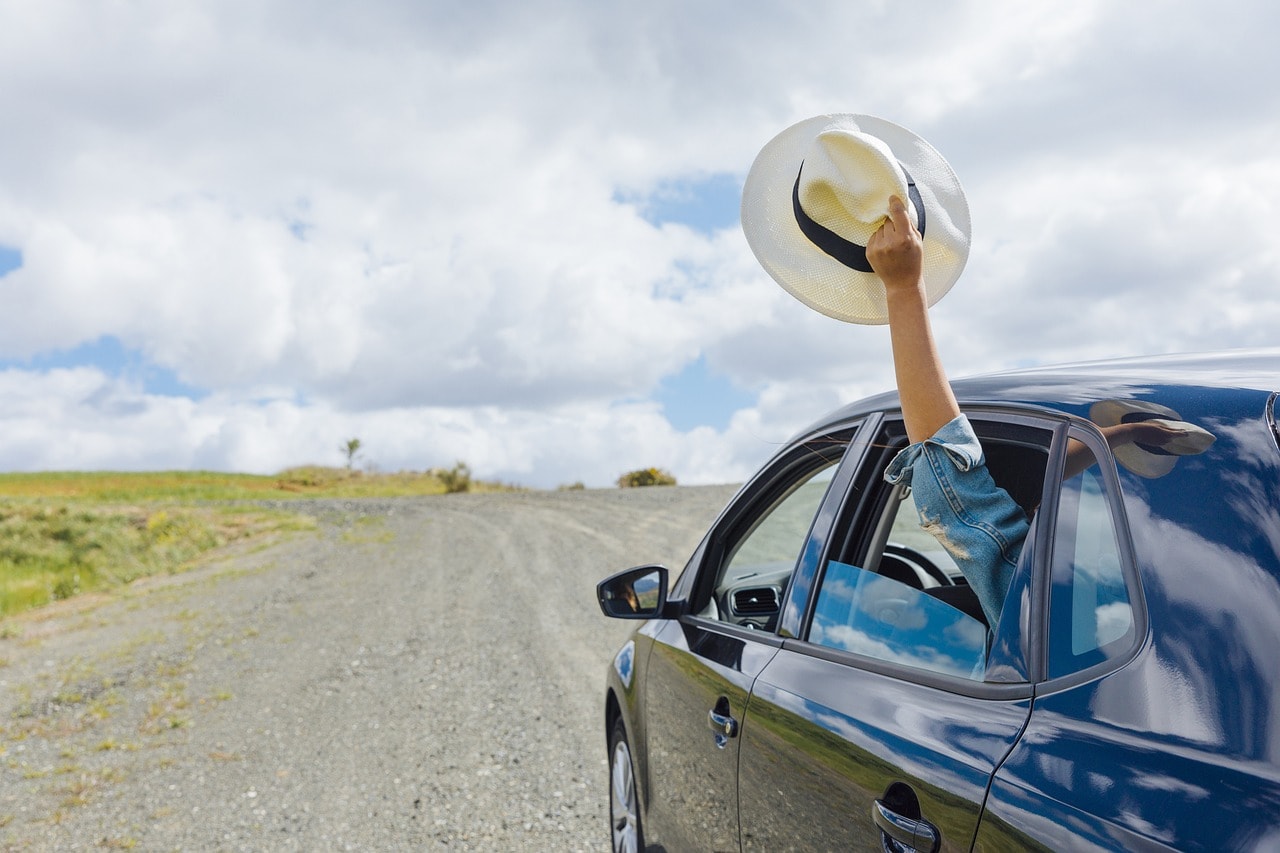
You have several solid ways to move around Puglia Italy, depending on your route, budget, and time. Driving gives you access to small towns and coastlines, while public transport works best between larger cities. Cycling and hiking add active options in rural and coastal areas.
Car Rental and Road Trips
Car rental gives you the most freedom in Puglia Italy. You can reach villages, farms, and beaches that trains and buses miss. This matters if you plan a Puglia road trip through Valle d’Itria, Salento, or the Gargano coast.
Roads stay in fair condition, but many are narrow outside cities. Drive on the right and watch speed limits.
Key points to know
- ZTL zones limit traffic in historic centers like Bari and Lecce
- Parking can be tight in cities and easy in small towns
- Summer demand raises prices, so book early
A car helps you explore Puglia Italy beaches and lesser-known things to do in Puglia Italy at your own pace.
Public Transport and Buses
Public transport connects major cities well. Trains link Bari, Brindisi, and Lecce to each other and to Rome. Regional trains cost less but run slower.
Buses fill the gaps where trains do not reach. They serve coastal towns and inland areas, but schedules vary.
| Option | Best Use | Notes |
|---|---|---|
| Trains | City-to-city travel | Reliable, fixed routes |
| Buses | Smaller towns | Fewer daily runs |
You should validate tickets before boarding. Public transport works best if you stay near main lines and plan ahead. It fits short trips focused on cities rather than remote areas.
Cycling and Outdoor Activities
Cycling suits flatter parts of Puglia Italy, especially farmland and coastal roads. Popular routes follow old rail lines and aqueduct paths. Bike lanes exist in Bari and Lecce, but traffic still requires care.
Summer heat can limit long rides. Start early and carry water.
Hiking stays low-key but rewarding. Coastal paths and rural trails pass olive groves, cliffs, and quiet beaches. Trails are not always marked, so offline maps help.
Cycling and hiking work best when paired with trains or a car. They add variety to things to do in Puglia Italy without long travel times.
Top Towns and Cities to Visit
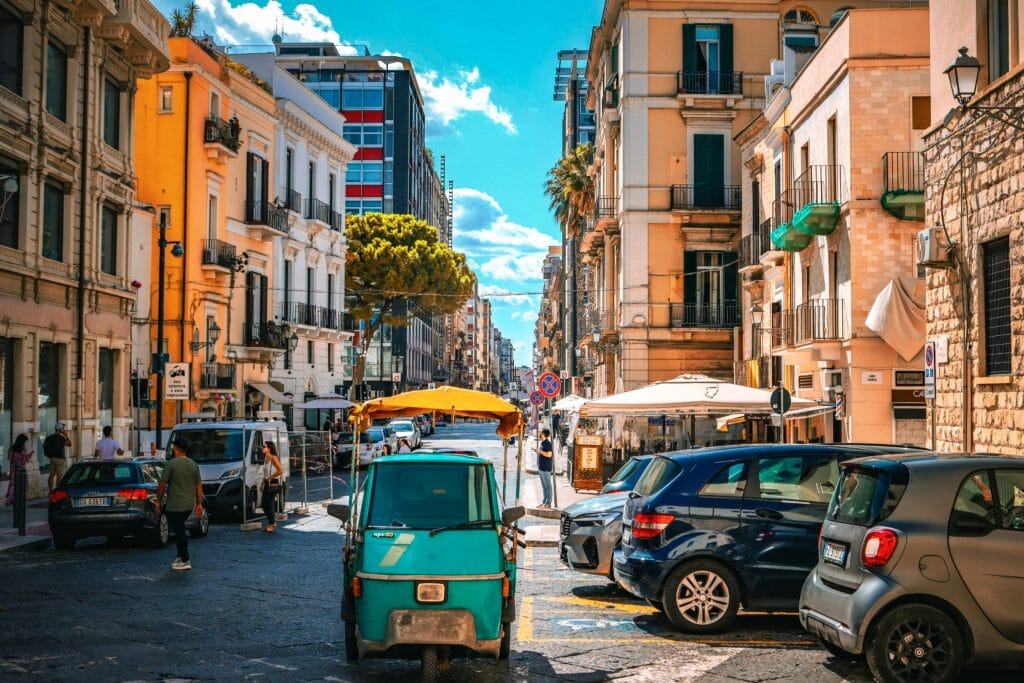
Puglia Italy offers port cities, baroque centers, and small hill towns with strong local character. You can move from busy streets to quiet lanes within short drives, which makes planning simple when you explore things to do in Puglia Italy.
Bari: Gateway to Puglia
Bari sits on the Adriatic coast and often serves as the first stop when you ask, where is Puglia Italy. The city has a major airport, a ferry port, and fast trains.
You should walk through Bari Vecchia, the old town. Narrow streets lead to the Basilica of San Nicola and the Norman-Swabian Castle. You will see locals making fresh pasta by hand near their doorways.
Along the seafront, you can enjoy long walks and simple seafood meals. Bari also works well as a base for day trips to Polignano a Mare and nearby Puglia Italy beaches.
Top highlights in Bari
- Basilica of San Nicola
- Old town streets
- Lungomare promenade
Lecce: Florence of the South
Lecce stands inland in Salento and earns the nickname Florence of the South for its rich baroque style. This guide to Lecce starts with its golden stone buildings, which glow in the sun.
You should visit the Basilica of Santa Croce and the Roman amphitheater in the city center. Both sit close to cafes and small shops, so walking works best.
Lecce also connects well to the coast. You can reach Adriatic or Ionian beaches in under an hour. Nearby towns like Galatina add depth, with frescoed churches and traditional food scenes.
Alberobello and the Trulli Houses
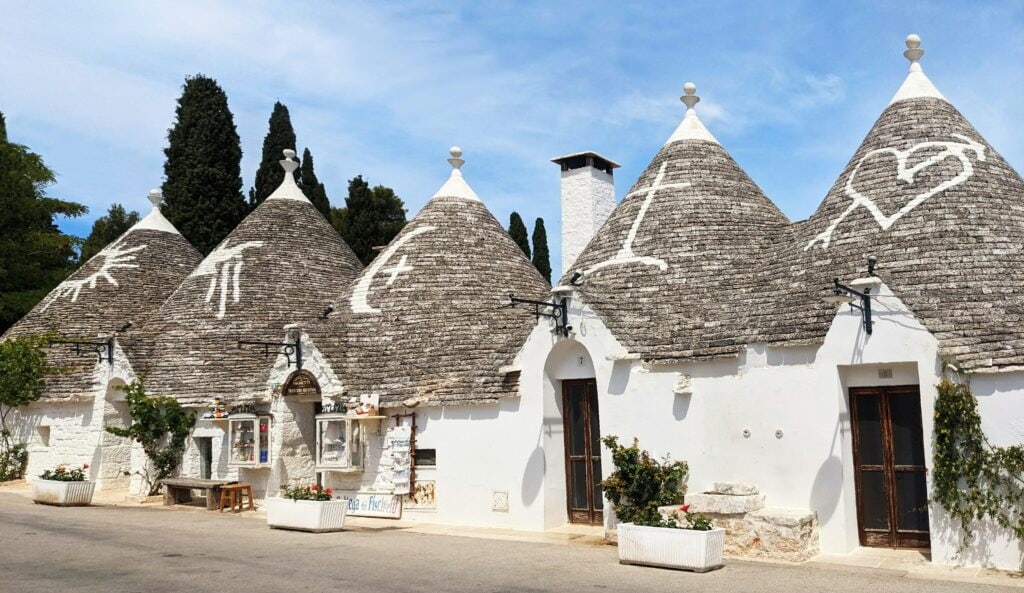
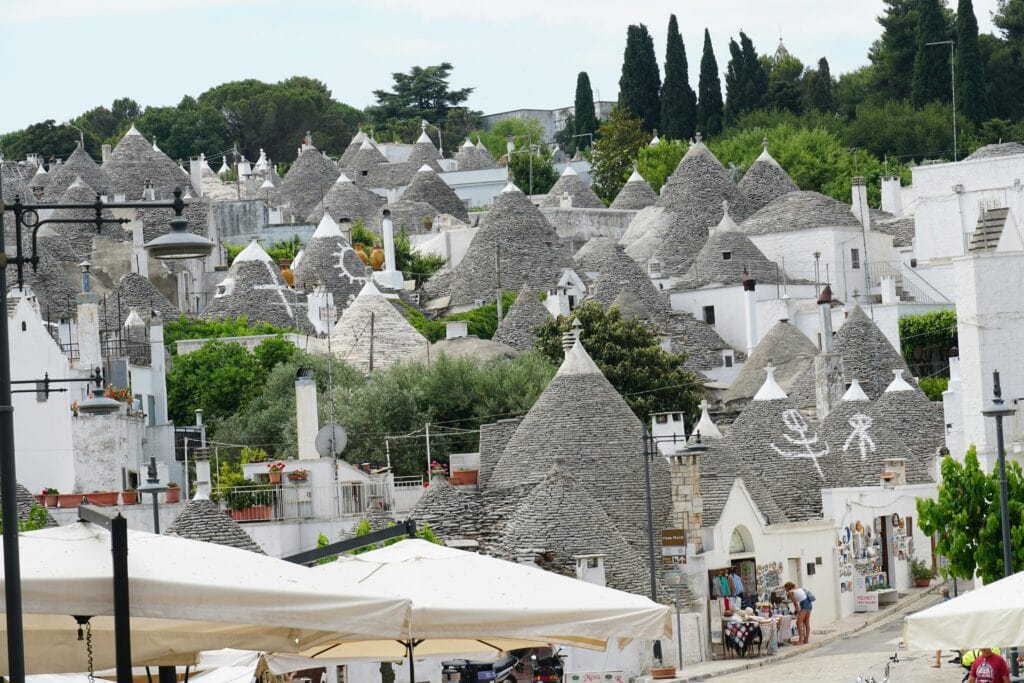
Alberobello ranks among the most unique towns in Puglia Italy. The town is famous for its trulli houses, small stone buildings with cone-shaped roofs.
You can explore entire neighborhoods filled with trulli. Each trullo uses dry stone walls without mortar, a building style shaped by local rules and materials. The Trullo Sovrano stands out as the only two-story example.
Many trulli now hold shops, museums, or guest rooms. Staying overnight gives you quieter streets after day visitors leave. Alberobello also pairs well with stops in Martina Franca and Cisternino.
Ostuni and Other White Towns
Ostuni rises on a hill near the coast and is known as the White City. Limewashed houses reflect sunlight and create clear views over olive groves and the sea.
You should wander uphill toward the cathedral, stopping at small terraces along the way. Beaches sit a short drive away, making Ostuni a good mix of town life and Puglia Italy beaches.
Other white towns deserve your time. Locorotondo feels calm and tidy, while Ceglie Messapica focuses on food traditions. In rural areas, you may visit a frantoio ipogeo, an underground olive mill used for centuries.
Puglia’s Coastal Beauty
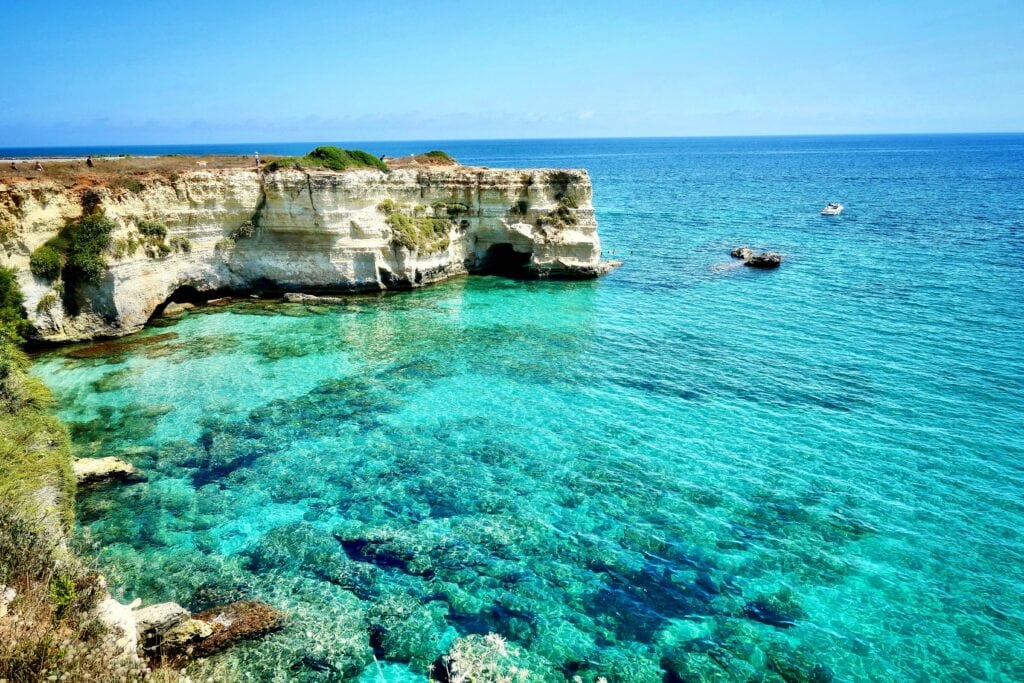
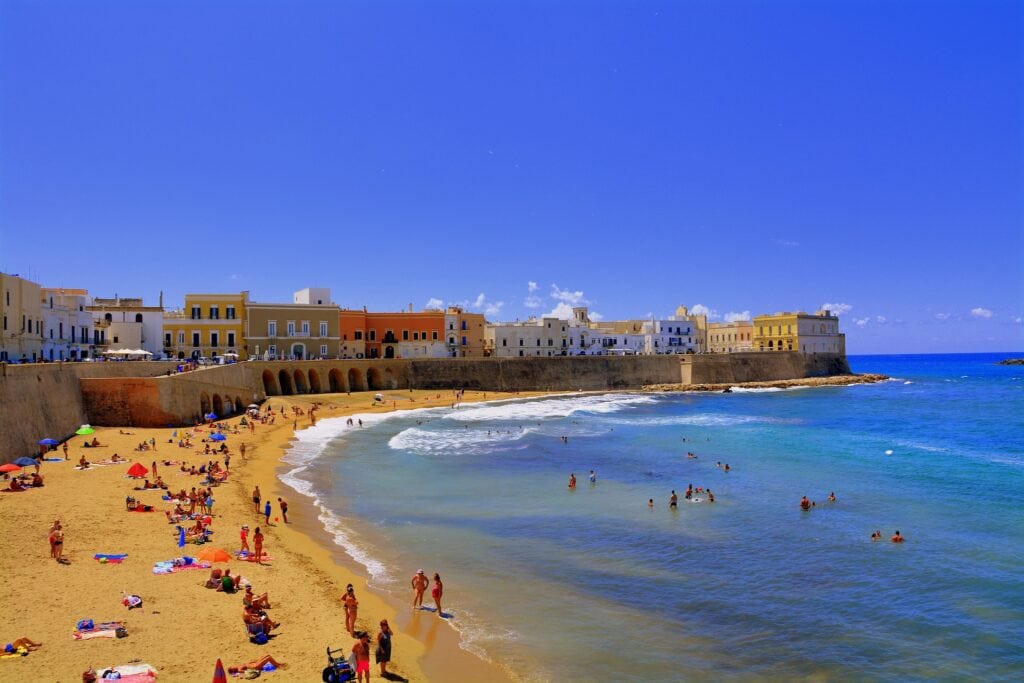
You find some of Italy’s most varied shorelines in Puglia Italy, with clear water, small coves, and walkable coastal towns. The region sits between the Adriatic Sea and the Ionian Sea, which explains why landscapes, beaches, and activities change as you move south.
Best Beaches in Puglia, Italy
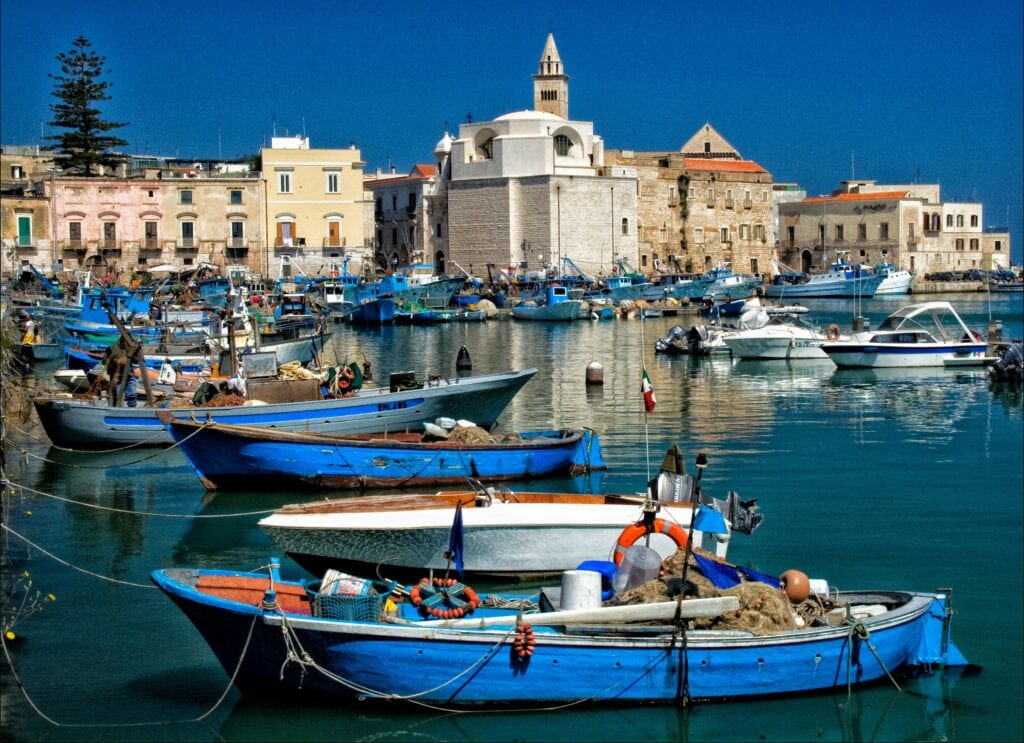
You can reach many of the best beaches in Puglia within a short drive of historic towns. Near Polignano a Mare (often called Polignano al Mare), Lama Monachile offers a dramatic pebble beach set between cliffs. Monopoli pairs small sandy beaches with an old harbor and easy access to cafés.
Along the Ionian coast, sand stretches wider and softer. Punta Prosciutto and Porto Cesareo feature shallow water that suits families. Farther south, Punta della Suina mixes pine forest shade with rocky swimming spots.
Popular Puglia Italy beaches by coast
| Coast | Notable beaches |
|---|---|
| Adriatic | Polignano a Mare, Monopoli, Torre dell’Orso |
| Ionian | Punta Prosciutto, Porto Cesareo, Punta della Suina |
Gargano Peninsula and National Park
The Gargano Peninsula rises sharply from the Adriatic Sea and feels wilder than southern areas. Gargano National Park protects dense forests, limestone cliffs, and quiet bays. You experience fewer crowds here, even in summer.
Vieste serves as the main base, with white cliffs, long beaches, and boat trips to sea caves. Inland, Monte Sant’Angelo offers views and a historic old town. From the coast, you can also reach the Tremiti Islands, known for clear water and snorkeling.
This area works well if you want hiking, swimming, and slower coastal towns in one place.
Salento and Santa Maria di Leuca
Salento sits at the southern tip of the region, where you clearly see where is Puglia Italy on the map. Here, the Adriatic and Ionian Seas meet near Santa Maria di Leuca. The coastline shifts between cliffs and sandy beaches within short distances.
On the Adriatic side, Otranto gives you rocky coves and landmarks like Grotta della Poesia and Torre dell’Orso. On the Ionian side, Porto Selvaggio and Santa Maria al Bagno offer calmer water and nature trails.
This mix makes Salento ideal for beach time and simple things to do in Puglia Italy, all in one compact area.
Culture, History, and Architecture
In Puglia Italy, layers of history shape daily life. Ancient Greek roots, medieval power centers, and strong local traditions appear in stone buildings, town layouts, and seasonal events that you can still experience today.
Castles and UNESCO Sites
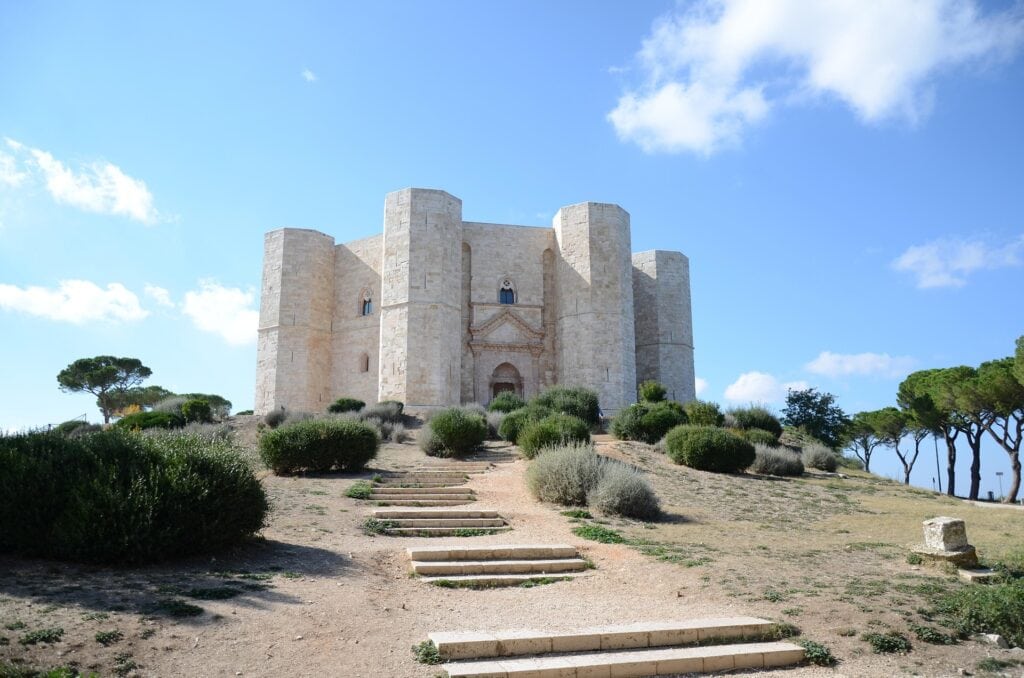
You see Puglia’s strategic past in its castles and protected sites. Castel del Monte, set on the Alta Murgia plateau, stands out for its octagonal shape and precise design. Builders raised it in the 13th century, likely as a symbol of power more than a fortress. It now holds UNESCO status.
In the north, Monte Sant’Angelo preserves a sacred site tied to early Christian worship. Pilgrims have visited for centuries, and the sanctuary also carries UNESCO recognition.
These landmarks sit near wide landscapes like Alta Murgia National Park. You can pair history visits with walks across open fields and rocky hills. This mix adds depth to common things to do in Puglia Italy.
Baroque Masterpieces
Southern Puglia towns showcase some of Italy’s finest baroque architecture. Lecce leads this style, built from soft local stone that artisans carved with great detail. The Basilica di Santa Croce shows the style at its peak, with figures, animals, and floral forms covering the facade.
You notice how baroque buildings shape entire streets, not just single churches. Palaces, city gates, and small chapels follow the same rich style.
Baroque grew here during a period of wealth and stability. It still defines town centers today and helps explain why travelers ask, where is Puglia Italy, when they see images of Lecce’s old city.
Traditional Villages and Festivals
In the countryside, you find older village forms that reflect daily life over many centuries. The Valle d’Itria, also called the Itria Valley, holds towns like Alberobello, Locorotondo, and Cisternino. Stone trulli houses and whitewashed streets define the area.
Many Puglia towns trace roots to Magna Graecia, when Greek settlers shaped trade and culture. That influence remains in town layouts and local customs.
Festivals keep these traditions active. Summer events honor patron saints with music, food stalls, and street lights. You often see these celebrations after beach days, especially near popular Puglia Italy beaches.
Food, Wine, and Local Experiences
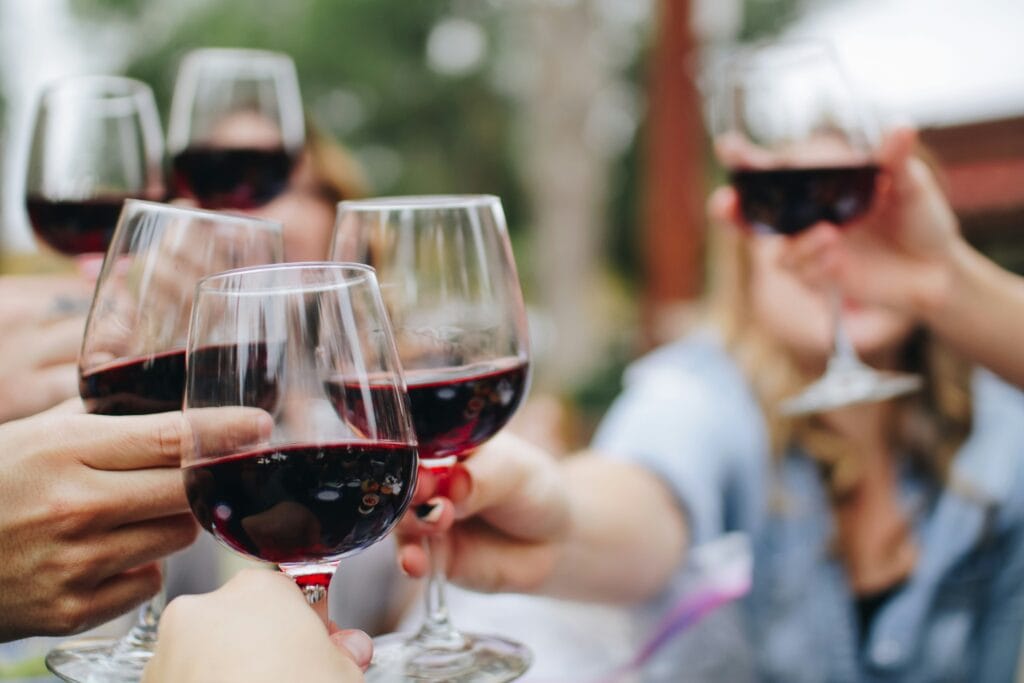
You eat simply and well in Puglia Italy, with food shaped by farms, coastlines, and long habits. Meals link to local wines, olive oil, and daily life, from bakeries to family farms. Many things to do in Puglia Italy center on tasting, learning, and meeting producers.
Traditional Cuisine and Specialties
You see handmade food everywhere, especially orecchiette, the region’s best-known pasta. Cooks serve it with cime di rapa, tomato, or slow-cooked meat sauces. Street bakeries sell focaccia barese, topped with tomatoes and olives, often eaten warm.
You also find burrata near Andria, best eaten the day it is made. Sweet breaks include pasticciotto, a filled pastry common in Lecce, and taralli as a salty snack. In the Itria Valley, grills serve bombette, small pork rolls cooked over fire.
Daily rituals matter. You stop for an aperitivo before dinner or order caffè leccese, iced coffee with almond milk.
| Dish | Where to Try It |
|---|---|
| Focaccia barese | Local bakeries like Panificio Fiore |
| Burrata | Andria and nearby towns |
| Bombette | Butchers and grills in Valle d’Itria |
Wineries and Olive Oil
You travel through fields of ancient olive trees set in red earth, a clear sign of where is Puglia Italy. Many estates press oil on-site and explain harvest methods. Tastings focus on freshness, bitterness, and balance.
Wineries sit close to small towns and vineyards. You often taste Primitivo and Negroamaro, two key local grapes. Hosts explain soil, climate, and food pairings in clear terms.
Visits stay relaxed and personal. Some estates offer walks through vines, while others focus on cellar tastings with local cheese and bread. You gain context, not sales pressure, and you leave with practical tips for choosing bottles back home.
Farms, Markets and Cooking Classes
You visit a masseria, a working farm that often includes lodging, meals, or classes. Many raise animals, grow vegetables, and press olive oil. Meals reflect what grows nearby and change with the season.
Town markets sell produce, seafood, and bread for daily cooking. You learn what locals buy and when, which helps if you stay longer or cook yourself. Cooking classes often start with shopping, then move to hands-on prep.
Classes focus on pasta shaping, sauces, and timing. You cook, eat together, and ask questions freely. These experiences fit well between beach days, even if your plan also includes Puglia Italy beaches.
Where to Stay
Your base in Puglia Italy shapes how easily you reach beaches, hill towns, and historic cities. Location, lodging style, and budget matter more here than in many regions because distances add up fast.
Best Areas for First-Time Visitors
If you are new to Puglia Italy, stay in the Valle d’Itria. Towns like Ostuni, Locorotondo, and Martina Franca place you near trulli villages, olive groves, and key roads. You can reach Alberobello and several small towns in under 30 minutes.
For the coast, choose Monopoli. You stay close to clear water, small coves, and classic Puglia Italy beaches. The old town feels local, and you avoid the heavy crowds of nearby Polignano a Mare.
If you want art and history, base yourself in Lecce. The city works well for southern trips and day drives across Salento. This helps if you plan many cultural things to do in Puglia Italy.
Hotels vs Trulli vs Masserie
Each lodging type offers a different stay. Your choice affects comfort, space, and daily travel time.
- Hotels suit short stays and city centers. You walk to restaurants and sights, which works well in Bari, Lecce, and Monopoli.
- Trulli give you a traditional stay in the countryside. These stone homes work best if you rent a car and want quiet nights.
- Masserie are restored farm estates. Many sit outside towns and include pools, gardens, and on-site dining.
If you ask where is Puglia Italy best experienced, masserie often show daily rural life. Hotels keep plans simple. Trulli focus on atmosphere over services.
Budget to Luxury Options
Puglia fits many budgets if you book early. Prices rise fast in summer, especially near the sea.
| Budget Level | What You Get | Best Areas |
|---|---|---|
| Budget | B&Bs, guesthouses | Bari, Lecce |
| Mid-range | Small hotels, trulli rentals | Valle d’Itria |
| Luxury | Masserie, resorts | Ostuni, Monopoli |
Budget stays often include breakfast and central locations. Mid-range options balance space and comfort. Luxury properties focus on privacy, pools, and food. Your budget also shapes how easily you reach Puglia Italy beaches and countryside towns.
Puglia Travel Tips and Itineraries
You will find that Puglia Italy rewards slow travel, short drives, and clear planning. The region sits in southern Italy, forming the heel of the boot, and it mixes historic towns, farms, and long coastlines.
Suggested Puglia Itineraries
A 7-day Puglia itinerary works well for first-time visitors. Start in Bari for flights and the old town. Continue to Polignano a Mare and Monopoli for coastal views and Puglia Italy beaches. Spend time in Alberobello to see the trulli, then visit Locorotondo and Martina Franca in the Itria Valley.
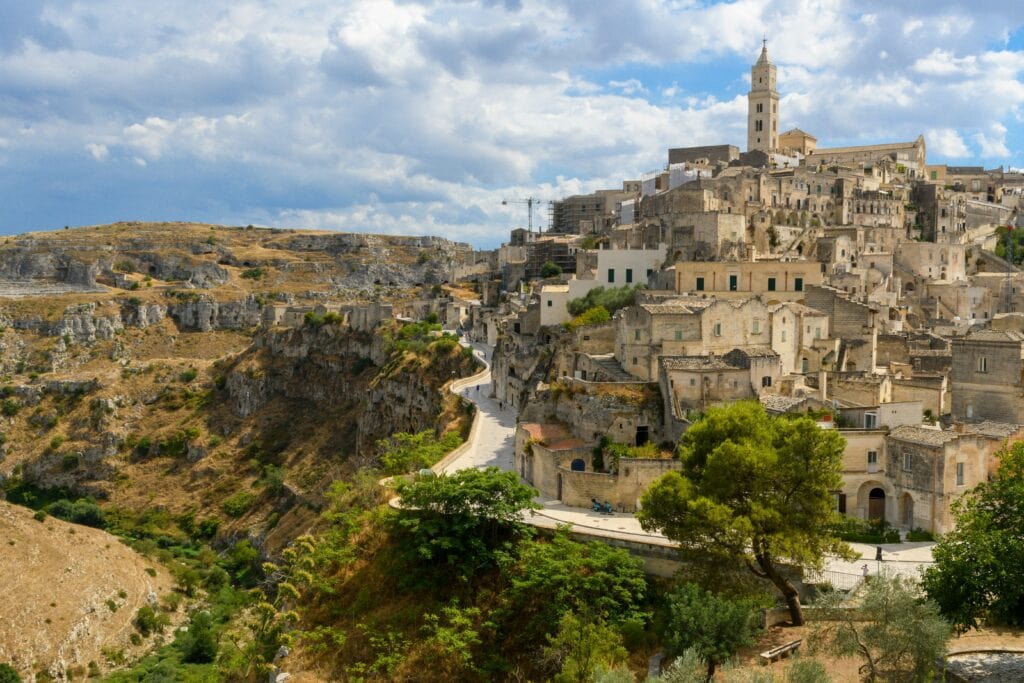
With 10 days, add Lecce for Baroque streets and Salento beaches. You can also include Matera, just outside the region, for its cave homes. For a slower stay, base yourself near Borgo Egnazia and explore nearby villages.
Common routes
- Coast-focused: Bari → Polignano → Monopoli → Ostuni
- Culture-focused: Bari → Alberobello → Martina Franca → Lecce
Practical Tips for Visitors
You will get the most from your trip by renting a car. Trains connect major towns, but many of the best places in Puglia sit in the countryside. Driving lets you reach beaches, farms, and small villages on your schedule.
Late spring and early fall offer warm weather and fewer crowds. July and August bring heat, traffic, and higher prices. Book hotels early if you visit in summer.
When you visit Puglia, plan meals around local food. Try orecchiette, burrata, and fresh seafood near the coast. Dress modestly in churches, and carry cash for small towns.
Quick tips
- Fuel stations may close midday
- Beach shoes help on rocky shores
- Dinner often starts after 8:00 pm
Frequently Asked Questions
This section answers common questions about planning a trip to Puglia Italy. It covers activities, trip length, itineraries, planning tips, and cultural sites you should not miss.
What are the top 10 activities to experience in Puglia, Italy?
Explore Alberobello’s trulli houses, a UNESCO site known for stone cone roofs. Walk the old towns of Polignano a Mare, Monopoli, and Ostuni.
Relax on Puglia Italy beaches along the Adriatic and Ionian coasts. Swim near sea caves or choose a lido with chairs and shade.
Tour Lecce’s baroque center, visit local markets, and join a food tasting, and also attend a summer festival or a local sagra.
How many days do you need in Puglia?
You need at least five days to see key towns and enjoy the coast. Seven to ten days lets you travel at a slower pace.
Puglia rewards unhurried travel. Long lunches, beach time, and evening walks shape daily life.
What is an ideal 7-day itinerary for a first-time visit to Puglia?
You can start with Bari for one day to see the old town and basilica. Then spend two days in Alberobello and the Valle d’Itria.
You can spend two days on the coast in Polignano a Mare or Monopoli. Add one day in Ostuni and nearby beaches.
Finish with one day in Lecce to explore history and baroque art. A rental car makes this plan easier.
Can you suggest travel tips for couples vacationing in Puglia?
You can stay in a masseria for quiet settings and local meals. Book dinners ahead, especially in summer.
You can plan beach mornings and town visits in the evening. This schedule helps you avoid heat and crowds.
You can mix coast and countryside for balance. Short drives make day trips simple.
How should one prepare for visiting Puglia in 2025?
You should plan a rental car, as public transport stays limited outside cities. Check opening hours due to the afternoon pausa.
You should book stays early for July and August. Learn basic Italian phrases for daily needs.
You should pack for heat in summer and cooler nights in spring and fall. Cash helps in small towns.
What are some must-visit sites in Puglia that showcase its history and culture?
You should visit Alberobello for trulli and Lecce for baroque churches. Bari’s old town shows daily life and faith.
You can see Castel del Monte, a unique medieval fortress. Where is Puglia Italy becomes clear when you travel its towns and coasts.
You can explore ancient olive groves and rural villages. These places show how history shapes modern life and things to do in Puglia Italy.
You Might Also Like:
If you enjoyed this post on The Ultimate Puglia Travel Guide Made Simple, you might also like: 21 Amazing places to visit in Italy, Ultimate Guide to The Safest Places in Europe, Budget Travel: How to See Europe on the Cheap